Farmland as
a strategic asset
Expanding the Efficient Frontier through Permanent Crop Allocation
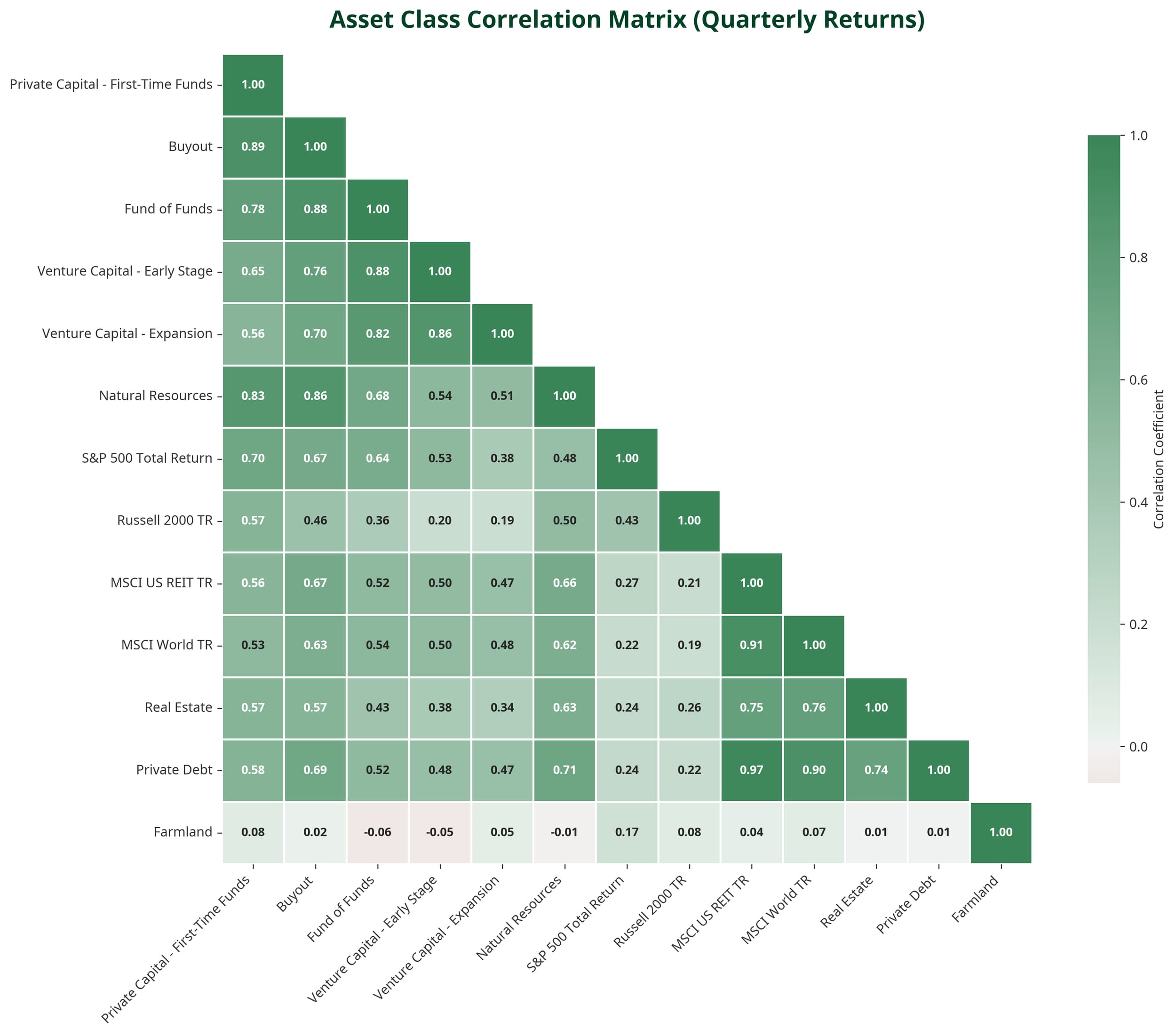
Diversification is often viewed as a static concept, when in reality it’s dynamic and highly dependent on correlation. Understanding how assets interact across market cycles is critical to managing risk. Viewed through this lens, diversification becomes less about labels and more about how assets actually behave over time.

Traditional Portfolios Carry Uncompensated Risk
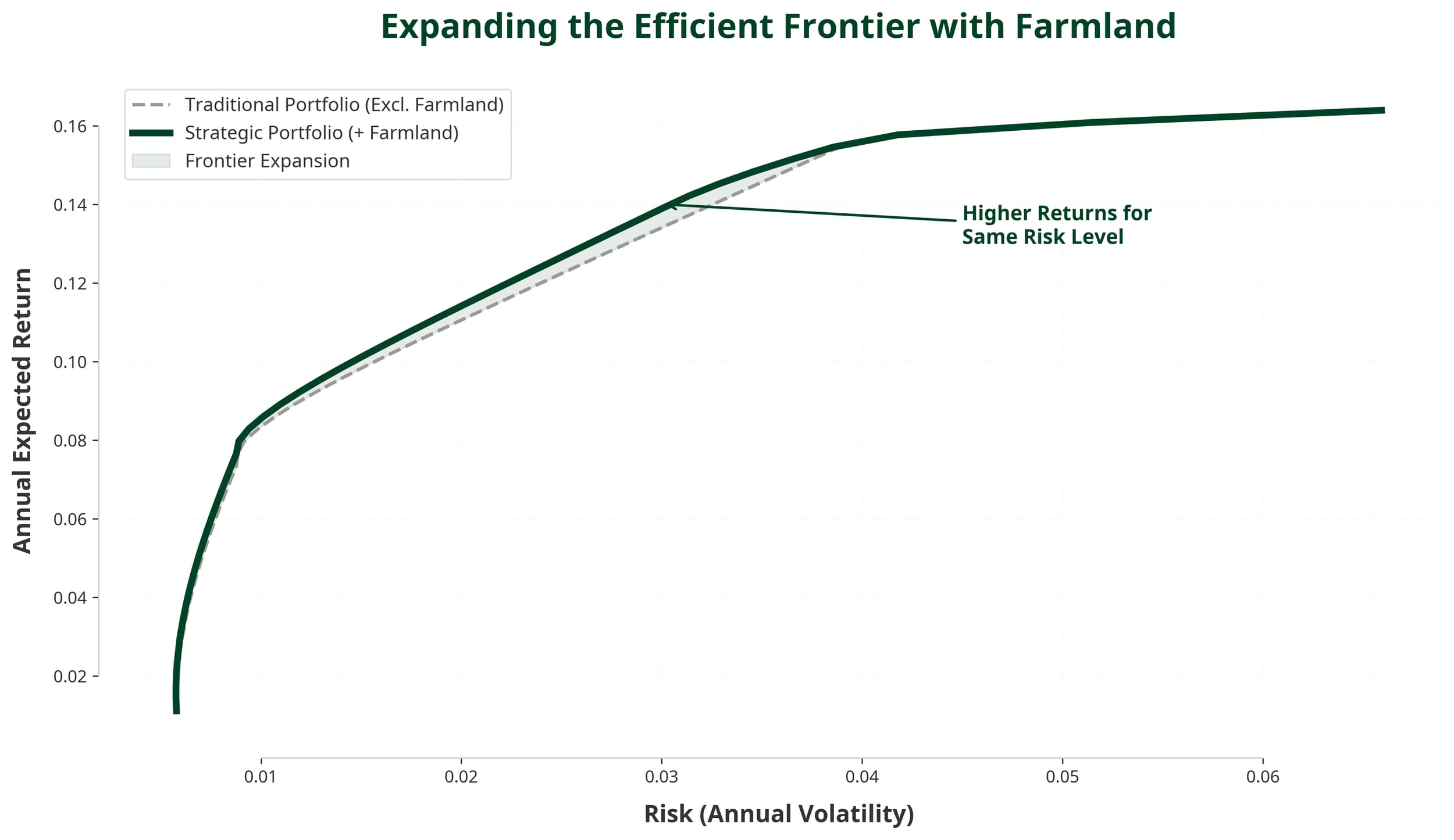
Our analysis reveals that the average portfolio sits below the Efficient Frontier. This means investors are carrying more risk than necessary for the expected return.
Traditional assets (equities, bonds, and real estate) move together, especially during market stress. This high correlation concentrates risk without proportional reward.
What single asset can shift the Efficient Frontier upward and to the left?
Strategic Integration of Farmland for Optimal Portfolios
Farmland, particularly permanent crops, provides this solution, offering superior risk-adjusted returns.
The challenge for wealth managers is no longer whether to include farmland, but how to implement it strategically.
By embracing this strategic approach, investors can effectively expand their Efficient Frontier and achieve a more resilient, risk-adjusted optimal portfolio for the long term.